

Brass Metal Perth: 11 Interesting Facts Worth Knowing Before Recycling
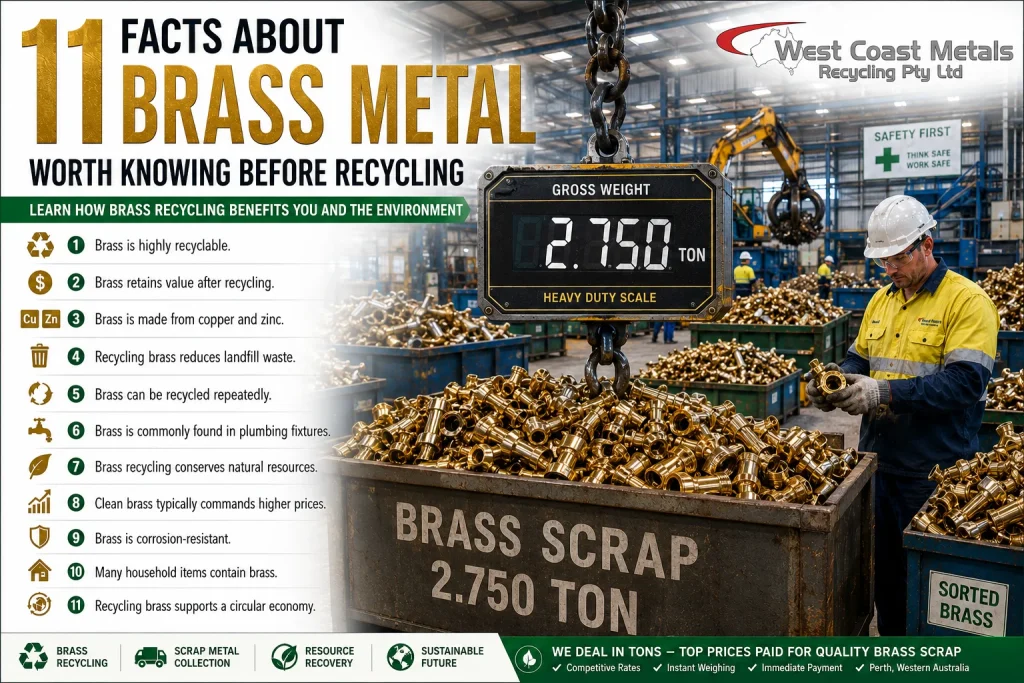
Most people walk past brass every single day without giving it a second thought. The tap in the bathroom, the door handle at the office, the old fittings piled up after a renovation. What they don’t realise is that brass has been valued by civilisations for over 3,000 years. And today it’s one of the most valuable scrap metals you can bring to a Perth recycling facility.
Brass is a non-ferrous metal alloy made primarily of copper and zinc, and it’s one of the most recyclable and valuable scrap metals you can bring to a Perth recycling facility.
Whether you’ve got a bag of old taps, workshop brass fittings, or a commercial load from a plumbing job, knowing a few things about this metal before you recycle can make a real difference to what you walk away with.
Here’s what most people miss that not all brass is the same, and the type you have directly affects its value at the scrap yard.
In this guide, you’ll find 11 research-backed facts about scrap brass every Perth homeowner, tradie, and business owner should know. Plus, you’ll explore how to identify it and exactly what happens when you drop it off.
What Is Brass Metal?
Brass is an alloy of copper and zinc, with copper content typically ranging from 55% to 95% and zinc from 5% to 45%. Unlike pure copper or zinc alone, brass offers a rare combination of strength, malleability, corrosion resistance, and acoustic properties. That is why it’s found in everything from Roman coins to modern Perth plumbing.
It’s classified as a non-ferrous metal. This means it contains no iron and it won’t stick to a magnet.
One common mix-up worth clearing up early:
Brass = copper + zinc
Bronze = copper + tin
They look similar but are different alloys with different compositions and different scrap values.
11 Facts About Brass Metal Worth Knowing Before You Recycle
Before you load up the ute and head to a Perth scrap metal yard, here’s what you actually need to know about the metal you’re holding.
Fact 1: Brass Is Not a Pure Metal – It’s a Copper-Zinc Alloy
Brass doesn’t occur in nature.
It’s manufactured by combining copper and zinc in specific ratios; typically, around 66% copper and 34% zinc, though this varies considerably by grade. This matters for recycling because different brass grades carry different copper concentrations. And copper content is the primary driver of scrap value.
The richer in copper, the more it’s worth.
Fact 2: There Are Two Main Types of Brass – Not Valued the Same
Type | Copper Content | Colour | Common Uses |
Yellow Brass | 60–70% | Golden yellow | Plumbing fittings, door hardware, instruments |
Red Brass | 85%+ | Reddish-brown | Hot water systems, valves, marine components |
Red brass is mostly mistaken for copper because of its darker, reddish tone. But it’s not the same metal. It commands a higher scrap price due to its elevated copper content.
Unsure which type of brass you have? Contact expert recyclers at West Coast Metals, they will assess it for you on arrival.
Fact 3: Brass Has Been Used by Humans for Over 3,000 Years
Brass has one of the longest track records of any manufactured alloy.
Early brass-like alloys have been traced to Mesopotamia and the Indus Valley around 3,000 BCE, with evidence suggesting ancient Egyptians were working with brass-like materials as far back as 4,500 BC.
The Romans produced brass widely and called it aurichalcum; prized for its gold-like lustre in coins and armour. By the Medieval period, it was essential for clocks and scientific instruments. During the Industrial Revolution, it became critical in steam engines and naval fittings.
Today, that same material sits in taps, door handles, and plumbing pipes in homes and worksites across Perth; still just as valuable.
Fact 4: Brass Is Naturally Antimicrobial
One of brass’s most surprising properties is one most people never hear about.
Because of its high copper content, brass continuously kills bacteria on contact; including dangerous strains like MRSA and VRE.
Over 400 copper alloy compositions, including various brass types, are registered with the US EPA for their clinically demonstrated ability to kill disease-causing bacteria. This is why brass is deliberately chosen for hospital handrails, door handles, and frequently touched public surfaces; not just for appearance, but for hygiene.
Important: This antimicrobial effect works on uncoated, unvarnished brass. A lacquered or painted surface reduces the property. Both coated and uncoated brass are recyclable, though they’re assessed differently.
Fact 5: Brass Is Non-Sparking – A Critical Property in WA’s Mining Industry
Strike most metals together and you get sparks. With brass, you don’t.
Brass is a non-sparking material, making it the standard choice for tools and fittings used in mines, oil refineries, and gas handling facilities; anywhere a single spark could trigger a catastrophic incident.
For those working in Western Australia’s resources sector, this explains why brass fittings are so common on site. When equipment is replaced or decommissioned, that scrap brass has real cash value. Don’t leave it lying around.
Fact 6: Brass Is Not Magnetic – That’s the First Thing a Recycler Checks
Brass is non-ferromagnetic. It has no magnetic properties at all. This makes the magnet the quickest identification tool you have at home.
Hold a magnet to your mystery metal:
- If it sticks → ferrous metal (steel or iron)
- If it doesn’t stick → likely brass, copper, or aluminium (all non-ferrous and recyclable)
At a professional Perth recycling company, a powerful magnet is used in the first stage of sorting to separate non-ferrous metals from ferrous scrap before any weighing or grading begins.
Fact 7: Brass Can Be Recycled Indefinitely Without Losing Quality
Plastic or paper degrade through repeated recycling. Conversely, brass can be melted down and recast unlimited times with no loss in strength, composition, or value. The copper and zinc simply reform into new products.
Additionally, the recycling process of brass is significantly less energy-intensive than mining and refining new copper and zinc ore.
Today, more than half of all brass used globally comes from recycled sources. Not because of regulation, but because it makes both financial and environmental sense.
Fact 8: You Probably Have More Brass at Home Than You Think
Brass scrap is far more common in Perth homes and worksites than most people realise. Common sources include:
- Bathroom and kitchen taps and faucets
- Door handles, hinges, and lock barrels
- Old plumbing pipes and valve fittings
- Light fittings and lamp bases
- Curtain rods and decorative hardware
- Keys and padlocks
Running a renovation or clearing a property? These items accumulate quickly. Brass is dense and heavy for its size; even a modest haul of old fittings is worth bringing in.
Fact 9: The Colour of Brass Tells You Something – But Not Everything
Wondering what colour is brass metal? Brass doesn’t always look the same because its colour shifts with composition:
- More zinc = brighter, golden-yellow tone
- More copper = darker, reddish-gold or reddish-brown tone
Colour gives a rough indication of grade, but it’s not a reliable measure of value on its own. A proper assessment weighs the load and tests composition.
One more thing: don’t clean, strip, or polish your brass before recycling. It won’t increase the value and can sometimes reduce it. Bring it as-is.
Fact 10: Selling Brass in Perth Requires Proof of Identity
This is the one fact that catches people off guard at the gate. So, know it before you go.
Under Western Australian law, selling copper or copper alloys (which includes all forms of brass) at a licensed recycling facility requires 100 points of identification. This is a WA regulation, not a business preference.
You have to bring:
- Your current driver’s licence
- A utility bill issued within the last 3 months (electricity, gas, or water)
These two documents together meet the 100-point ID requirement. The regulation protects against metal theft and supports responsible recycling across the state.
Fact 11: Recycling Brass Supports WA’s Circular Economy
Every kilogram of brass recycled is a kilogram of copper and zinc that doesn’t need to be mined.
For a state where mining is one of the defining industries, responsible recycling in Perth carries real environmental weight. When businesses, tradies, and households recycle scrap brass instead of sending it to landfill, it directly reduces demand for new raw material extraction; closing the loop on resources that have already been refined and shaped.
For commercial customers like plumbing contractors, builders, and industrial operators, regular scrap brass collection is both financially and environmentally smart.
West Coast Metals operates Perth’s largest network of over 600 bins, with ongoing collection options for commercial and industrial sites of any size.
How to Identify Brass Metal Before You Recycle – Quick Checklist
It’s likely brass if:
- Yellowish-gold or reddish-gold in colour
- Does NOT stick to a magnet
- Feels noticeably heavy for its size
- Found on taps, plumbing fittings, door handles, or hinges
- Shows a greenish patina from age — still fully recyclable
It might be something else if:
- Sticks to a magnet → ferrous metal (steel or iron)
- Bright vivid orange → pure copper (still valuable, accepted separately)
- Very light and silvery → likely aluminium
What Happens to Your Brass at a Perth Recycling Facility?
Almost all brass alloys in circulation today are recycled. Because brass is non-ferromagnetic, it’s quickly separated from ferrous scrap using a magnet; making the sorting process fast and accurate.
Here’s how to recycle brass metal; full journey from your drop-off to a new product:
- Drop-off or collection: Bring your brass to our Perth yard. Or arrange a pickup for larger loads.
- Weighing and assessment: Your load is weighed on certified scales and graded. Yellow brass and red brass are priced differently.
- Sorting and separation: Brass is separated from other metals accurately through magnetic testing and visual inspection.
- Melting: Sorted brass enters industrial furnaces. It is heated to approximately 900°C until fully molten.
- Recasting: The molten brass is poured into billets, reheated, and extruded into new material for manufacturing. Zero loss in quality assured.
That’s the circular economy in action. It starts the moment you drop your scrap at the gate.
Got Scrap Brass in Perth? Let’s Turn It into Cash.
Unsure if your metal is worth bringing in? Tired of it taking up space?
Sell Your Scrap Metal to West Coast Metals – Perth’s Most Professional Scrap Brass Recycler
At West Coast Metals Recycling, we’ve been helping Perth residents, tradies, and businesses turn scrap brass into real cash for over 38 years. As WA’s only female-run recycling facility, we offer honest assessments, competitive pricing, and a clean, professional yard that’s nothing like your typical scrapyard.
Our team will identify your metal, give you a transparent quote, and pay you on the spot — cash or bank transfer.
Just bring your driver’s licence, your utility bill, and your brass. We’ll handle everything else.
FAQs About Brass Metal Recycling in Perth
- Is brass worth recycling in Perth?
Yes. Brass is one of the more valuable non-ferrous metals you can recycle. Red brass commands a higher price per kilogram due to its elevated copper content (85%+). While yellow brass is also consistently in demand at Perth recycling facilities. Even smaller quantities are worth bringing in.
- How do I know if my metal is brass or copper?
Start with the magnet test. Neither brass nor copper is magnetic. If it sticks, it’s a ferrous metal. If not, look at the colour: copper is a vivid, bright orange-red, while brass has a warmer yellowish-gold or reddish-gold tone.
- Do I need ID to sell brass scrap in Perth?
Yes. Under WA regulations, selling copper and copper alloys, including all forms of brass, requires 100 points of identification: a current driver’s licence plus a utility bill issued within the last three months.
- Can I recycle brass that’s been painted or lacquered?
Yes. Coated or painted brass is fully recyclable. Surface coatings are removed during the cleaning and melting stages of the process. You don’t need to strip or prepare your brass before bringing it in.
- How much brass do I need before it’s worth recycling?
We accept everything from a small bag of old taps to large commercial loads from plumbers, builders, and industrial sites. For regular ongoing volumes, we also offer bin hire and scheduled collection services across Perth.
- What’s the difference between brass and bronze for recycling?
Brass is copper + zinc. Bronze is copper + tin. Both are non-ferrous and recyclable, but they’re graded separately because of their different compositions.