

Ferrous Scrap Metal Prices Per Tonne in Australia (2026 Guide)
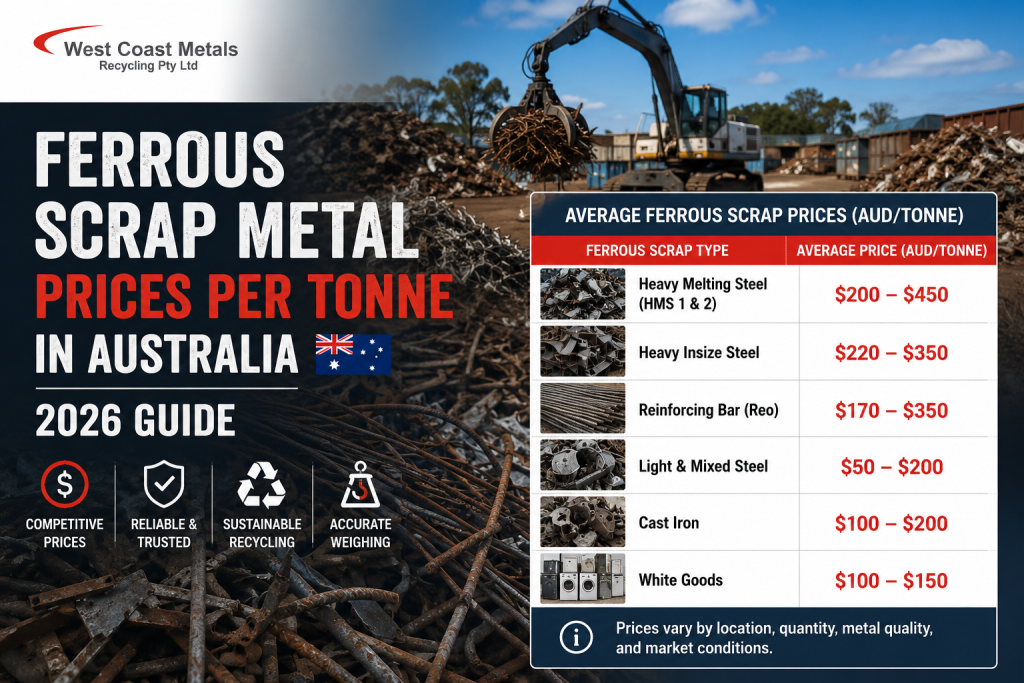
As of 2026, ferrous scrap metal prices in Australia range from around $50 to $450+ per tonne, depending on the type of metal, its condition, the quantity you’re selling and current market demand. Heavy structural steel and clean Heavy Melting Steel (HMS) are among the highest-paying ferrous grades, while mixed or contaminated loads often attract lower prices.
In this guide, we’ll explain the current scrap metal prices for ferrous materials in Australia, what influences those prices and how you can maximise the value of your scrap before heading to your local recycling yard.
Current Ferrous Scrap Metal Prices Per Tonne in Australia (2026)
The table below provides a quick snapshot of the average ferrous scrap metal prices across Australia in 2026.
Ferrous Scrap Type | Average Price (AUD/Tonne) |
Heavy Melting Steel (HMS 1 & 2) | $200 – $450 |
Heavy Insize Steel | $220 – $350 |
Reinforcing Bar (Reo) | $170 – $350 |
Light & Mixed Steel | $50 – $200 |
Cast Iron | $100 – $200 |
White Goods | $100 – $150 |
Please note: These prices are indicative only and may vary depending on market conditions, your location, the quality of your scrap and the recycling facility you visit. If you’re selling a large quantity of steel, it’s always worth requesting an up-to-date quote before loading your trailer.
Factors that Influence Ferrous Scrap Metal Prices
Here are the five common factors that influence the price of ferrous scrap metal in Australia.
1. The Type of Ferrous Scrap You’re Selling
The biggest factor affecting your payout is the type and grade of steel or iron you bring to the recycling yard.
For example, Heavy Melting Steel (HMS), structural steel and thick steel plate command higher prices because they’re dense, contain very little contamination and can be processed efficiently by steel mills. In most cases, heavy steel is classified as material that’s more than 5–6mm thick, such as beams, columns, heavy plate and industrial steel.
Lighter materials like sheet metal, old fencing, roofing sheets and mixed household steel sit at the lower end of the price range because they’re thinner, lighter and often require more sorting before they can be recycled.
2. The Cleanliness of Your Scrap
Here’s something that surprises a lot of first-time sellers: cleaner scrap often means a better payout.
It isn’t because the steel itself is worth more. It’s because clean scrap takes less time and effort to process.
For example, if your steel still has timber, concrete, rubber, plastic or insulation attached, the recycling yard has to remove those materials before the metal can be recycled. That extra labour and processing can reduce the value of your load.
Over the years, we’ve found that customers who spend a little time preparing their scrap before bringing it in often have a much smoother grading process. You don’t need to make everything spotless, but removing obvious non-metal attachments wherever it’s safe to do so is always worthwhile.
3. The Quantity You’re Selling
The amount of ferrous scrap you have can also influence the price you receive.
If you’re cleaning up the garage or replacing an old steel gate, you’ll still be paid for your scrap. However, businesses, demolition contractors, fabrication workshops and construction sites that generate several tonnes of steel may be able to access more competitive account pricing.
At West Coast Metals Recycling, we work with everyone from homeowners to large industrial and mining businesses. For customers with ongoing or high-volume scrap, we also provide scrap metal bin hire and collection services across Perth, making it easier to recycle larger quantities efficiently.
4. Current Market Demand
Like any traded commodity, ferrous scrap prices move with the market.
When steel mills require more recycled steel for manufacturing, prices improve. When demand slows, prices can soften as well.
Australian scrap prices are also influenced by international markets. Global steel production, export demand from Asian steel mills and major infrastructure projects can all affect what recycling facilities are paying. That’s one of the reasons steel scrap prices can change from month to month, even if you’re selling the same grade.
5. Scrap Yard Grading & Processing
Not every recycling yard grades scrap in exactly the same way.
The equipment they use, the materials they specialise in and their processing costs can all influence the final price offered. That’s why choosing an experienced and reputable recycler is just as important as knowing the market price.
At West Coast Metals Recycling, every load is assessed using transparent grading practices and accurately weighed, so you’re paid based on the type, quality and quantity of the scrap you bring in.
Different Types of Ferrous Scrap Metal & Their Worth
If you’re new to ferrous metal recycling, it’s easy to assume that all steel is worth the same. In reality, different grades have different values because they’re processed differently and are used for different recycling purposes.
The table below gives you a quick overview of the most common ferrous scrap categories you’ll come across.
Ferrous Scrap Type | Common Examples | Relative Value |
HMS 1 | Heavy structural beams, thick steel plate, machinery frames | Highest |
HMS 2 | Heavy steel with light rust or minor attachments | High |
Heavy Insize | Heavy steel cut to less than 1 metre in length | High |
Reinforcing Bar (Reo) | Construction reinforcing steel | Medium–High |
Cast Iron | Engine blocks, pipes, machine parts | Medium |
Light & Mixed Steel | Roofing sheets, fencing, filing cabinets, and household steel | Low |
White Goods | Washing machines, dryers, ovens and similar appliances | Low–Medium |
How You Can Get the Best Price for Your Ferrous Scrap
Getting the best price isn’t just about waiting for the market to improve. In many cases, a few simple steps before you visit the scrap yard can help maximise the value of your load.
Sort Your Ferrous Scrap Properly
One of the most common mistakes we see is everything being thrown into one pile.
Heavy structural steel, cast iron, reinforcing bar and light sheet metal all have different values. When they’re mixed together, it takes longer to grade the load accurately, and some materials end up being paid at a lower rate than they deserve.
If you have time, separate your scrap before loading it. It makes the recycling process quicker and helps ensure each grade is assessed correctly.
Remove Non-Metal Attachments
Plastic, timber, rubber, insulation and concrete don’t add value to your scrap—they simply add weight that can’t be recycled as steel.
You don’t need to spend hours cleaning every piece, but removing obvious non-metal materials wherever it’s practical can improve the quality of your load and make processing much easier.
Keep Ferrous and Non-Ferrous Metals Separate
A simple magnet can save you money.
If the magnet sticks, it’s a ferrous metal like steel or iron. If it doesn’t, you have aluminium, copper, brass or another non-ferrous metal that could be worth considerably more.
Keeping these materials separate helps ensure each one is graded and paid at its correct market value.
Bring Larger Loads Where Possible
If you’re planning a renovation, factory clean-up or demolition project, it might be worth accumulating your scrap rather than making multiple small trips.
Larger loads are more efficient to handle and, in some cases, qualify for more competitive pricing. If transporting several tonnes of steel isn’t practical, ask whether your recycler offers scrap metal bins or collection services.
Recycle Your Ferrous Scrap with West Coast Metals
Whether you’re selling a few old steel beams or managing ongoing industrial scrap, choosing the right recycling partner can make the process much easier.
For 38 years, West Coast Metals Recycling has been helping Perth homeowners, tradies, manufacturers, demolition contractors and mining businesses recycle ferrous and non-ferrous metals responsibly.
As one of the leading Wangara scrap recyclers with our family-owned, female-run metal recycling facility in nearby Malaga, we’re proud to offer a professional, well-organised recycling yard that’s a little different from the traditional scrapyard experience.
Along with competitive scrap metal prices Perth residents and businesses rely on, we also provide scrap metal bin hire, large-scale collection services and friendly advice to help customers get the most value from their scrap. Whether you’re visiting us with a trailer load or managing tonnes of steel from a commercial project, our experienced team is here to help.
FAQs
What is the current ferrous scrap metal price per tonne in Australia?
As of 2026, ferrous scrap metal prices range from around $50 to $450 per tonne, depending on the type of material, its grade, cleanliness, quantity and current market conditions.
What is the highest-paying ferrous scrap metal?
Heavy Melting Steel (HMS 1), heavy structural steel and heavy in-size steel are typically among the highest-value ferrous grades because they’re dense, contain minimal contamination and are highly sought after by recyclers.
Does rusty steel still have value?
Yes. Light surface rust is common and doesn’t stop steel from being recycled. However, excessive corrosion or heavy contamination can reduce the overall value of the load.
Do I need a large amount of steel to sell it?
No. Most recycling yards accept both small household quantities and large commercial loads. If you regularly generate scrap or have several tonnes to recycle, it’s worth asking about bin hire or collection services, as these can make the process much more convenient.