

A Complete Guide to The Difference Between Ferrous and Non-Ferrous Metals
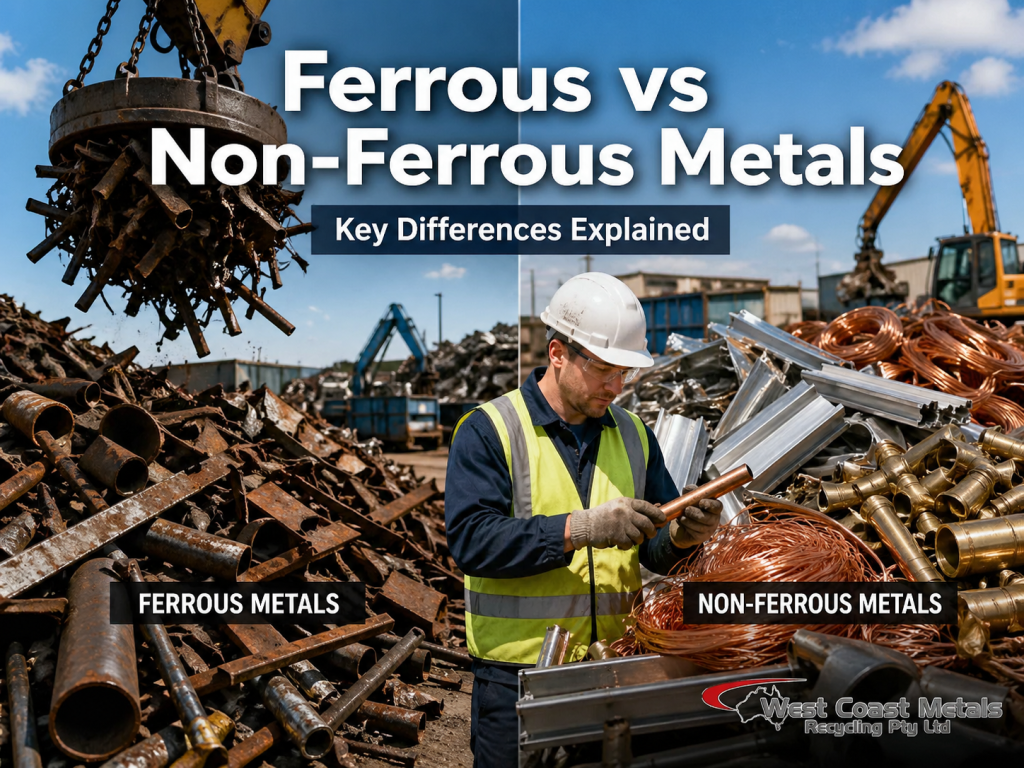
If you have old home appliances or automobile parts, you might be planning to throw them away.
If yes, then you don’t know their real value.
These parts are made of ferrous and non-ferrous metals that are used for recycling and manufacturing purposes. As a home or car owner, you must know the differences between these two so you can be paid well for the metal scrap you have.
That is why here, we will discuss everything about ferrous and non-ferrous alloys, their types, properties and uses and how to sell them at the best prices. So, let’s start.
Brief History Of Ferrous And Non-Ferrous Metals
Metals have been used by people for thousands of years.
Until 5000 BCE, the people used gold and copper because they were easy to shape. Then, at around 3000 BCE, the Bronze Age began, when copper and tin mixed to produce a more stronger metal called bronze. At that time, people used it for making musical instruments, tools and ornaments.
But, bronze was quickly replaced by ferrous metal at around 1200 BCE, and this period was known as the Iron Age. Ferrous metals gained popularity rapidly as they were cost-effective, stronger, readily available and were ideal for manufacturing aircraft, machinery and construction.
What Are Ferrous Metals
A metal that contains iron is called a ferrous metal, for example, cast iron, stainless steel, and many more. They are highly recyclable and are very beneficial in industrial sectors like the tools manufacturing industry.
Although the presence of iron (Fe) makes ferrous metals stronger but at the same time more prone to corrosion. This type of metal is composed of 90% iron and some other alloys like chromium, nickel, vanadium, and manganese.
Main Types Of Ferrous Metals
The mixing of ferrous metals and alloys gives rise to various varieties; here are some.
- Iron: pure iron
- Steel: iron with approx. 2% carbon
- Carbon steel: an iron mixed with 2.1% carbon.
- Cast iron: a melted and moulded form of iron ore with more than 2% carbon content.
- Stainless steel: a combination of iron, carbon and 2.5% chromium.
- Wrought iron: a ferrous alloy with iron and 1-2% fibrous slag.
- Alloy steel: a mixture of manganese, silicon, and chromium with carbon steel.
- Tool steel: produced by alloying carbon steel.
Characteristics of Ferrous Metals
- Ferrous metals have high strength and can bear heavy loads.
- They are magnetic.
- Heat-resistant, hence can tolerate high temperatures.
- Prone to rust or corrosion.
- Heavier and denser in weight.
- Conduct heat and electricity.
Uses
Because of their high strength and ability to bear heavy loads, ferrous metals can be used.
- In the construction industry for manufacturing beams and infrastructure.
- For making automotive parts like engines and gears.
- For manufacturing heavy industrial machinery.
- In the transport industry for building railway tracks and roads.
- For manufacturing household appliances like sinks, cutlery, etc.
The best thing is that, despite low scrap value, they can be profitable when sold in bulk quantities.
What Are Non-Ferrous Metals
A type of metal without iron or any other ferrous-containing element is known as a non-ferrous metal. They can be identified easily because they are cleaner and shinier than ferrous metals.
Furthermore, these alloys are made up of elements like copper, aluminium, nickel, tin, titanium, zinc, and some alloys like bronze, which makes them more resistant to corrosion.
Main Types of Non-Ferrous Metals
Some common types of non-ferrous metals are
- Aluminium
- Copper
- Lead
- Zinc
- Titanium
- Nickel
- Tin
- Magnesium
- Beryllium
- Tungsten
Characteristics Of Non-Ferrous Metals
- They are lightweight.
- Many of them can conduct an electric current with low resistance and heat.
- Some non-ferrous metals, such as gold and platinum, are compatible with cells and tissues and cause no adverse reactions.
- They are corrosion-resistant.
- These metals are highly recyclable.
Uses
Non-ferrous metals, because of their diverse range of properties, are suitable for various applications and can be used in
- Making aircraft components due to their lightweight and flexibility.
- Construction for plumbing, electrical wiring, etc.
- The automotive industry manufactures engine components.
- The food industry is for packing food and drinks.
- Medical equipment due to its biocompatibility.
Despise light in weight, non-ferrous metals have a higher scrap value than ferrous metals.
And if you want to learn more about these metals, check out our guide on types of metals and their uses.
Differences Between Ferrous And Non-Ferrous Metals
Even though the main difference between them is already explained by their name, as the word ferrous means “containing iron,” so non-ferrous eventually means not consisting of iron. Here are some other differences that distinguish them from each other.
Ferrous metals | Non-ferrous metals |
Contains iron (Fe). | Do not contain iron |
Can corrode | Resistant to corrosion |
Strong and durable | Strong but flexible |
Dull appearance | Shiny appearance |
Cost-effective | Expensive |
Heavy | Lightweight |
Low scrap value | High scrap value |
Now that you have learned enough about both metals, let’s take a closer look at how you can sell them at the best prices.
Tips for Selling Scrap Metal In Perth
Here are some tips from experts
- Separate ferrous and non-ferrous metals
- Prioritise selling high-value metals like copper
- Sell in bulk where possible to get maximum profit
- Stay updated on market rates
- Choose a trusted buyer for fair pricing
Conclusion
Understanding in detail the ferrous and non-ferrous alloys is important to make the right decision while selling scrap metal.
Ferrous metals contain iron and are durable; on the other hand, non-ferrous metals do not contain iron and are flexible. Both metals have their own properties and value. When sorted, cleaned, and taken care of properly, they can give you a huge profit.
So ready to sell the scrap metal in Perth?
Contact West Coast Metals
With 38 years of experience in recycling metals, we offer
- Professional recycling services
- Best price for both ferrous and non-ferrous metals
- 100% customer satisfaction
FAQ
1- How can you distinguish between ferrous and non-ferrous metals?
Both alloys can be distinguished easily as ferrous metals have iron, hence are magnetic and can corrode. In contrast, non-ferrous metals do not contain iron, do not rust, and are lightweight. These properties impact their strength, weight and applications.
2- What are three differences between ferrous and non-ferrous alloys?
Ferrous and non-ferrous metals can be simply identified by their appearance, as non-ferrous metals are cleaner and shinier, while ferrous metals are dull. Besides that, ferrous metals have iron and are often magnetic, whereas non-ferrous metals do not have iron and are corrosion-resistant. They can be readily identified by a magnet and rust test.
3- What is an example of a non-ferrous alloy?
Brass is a typical example of a non-ferrous metal; it is an alloy of copper and zinc. It is corrosion-resistant, conducts electricity, and is used in plumbing, electrical parts and for decorative purposes.
4- How to tell if metal is ferrous or not?
Use a magnet as ferrous metals are attracted to it due to iron; also, look for signs of rusting. While non-ferrous metals are usually resistant to corrosion and non-magnetic, they will not be attracted to the magnet.
5- What metal will never rust?
Aluminium and stainless steel are metals that will never rust. They develop oxide films to resist corrosion, which is beneficial for outside, ocean, and wet environments.