

How Copper Recycling Helps the Environment in Western Australia
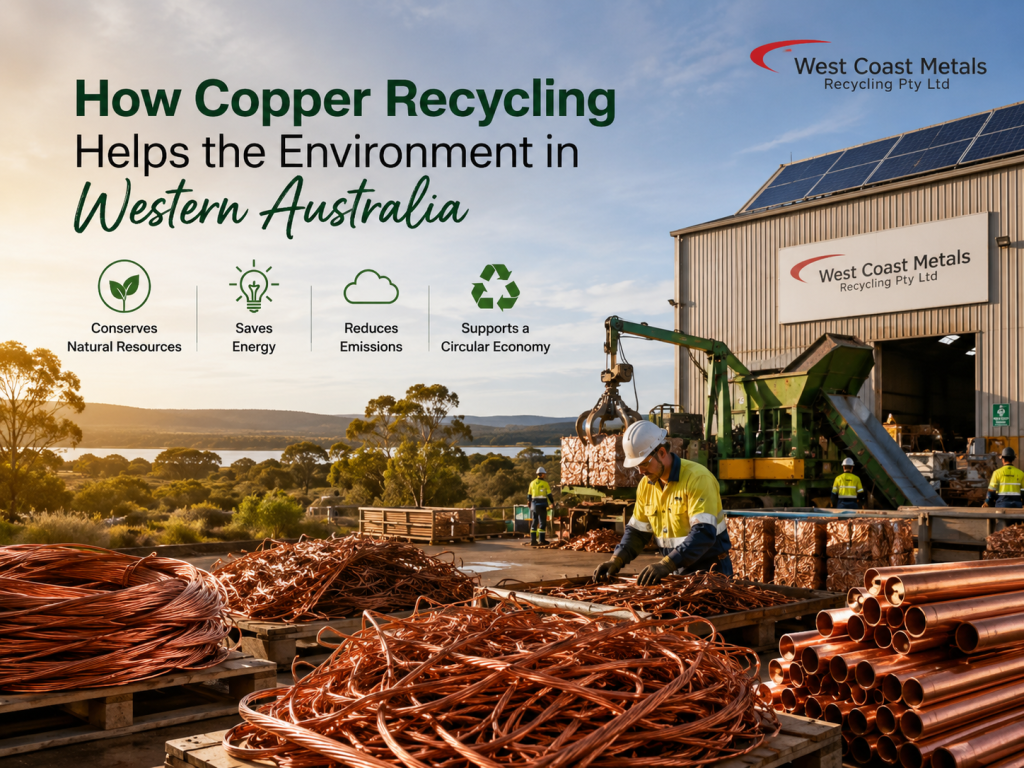
Copper recycling in Western Australia does more than tidy up your garage or job site. Every kilo of copper you recycle instead of sending to landfill cuts carbon emissions, saves energy, and takes pressure off the mining that would otherwise be needed to dig up new ore. It’s one of the simplest, most practical things a Perth household or business can do for the environment, and it happens to put cash in your pocket at the same time.
In this blog, we’ll look at why copper recycling matters so much environmentally, what actually happens to your scrap once it leaves your hands, and how you can get involved through Perth copper recycling right here in WA.
Environmental Benefits of Copper Recycling at a Glance
Benefit | Why It Matters |
Uses up to 85% less energy | Far less electricity needed than mining and refining virgin ore |
Reduces greenhouse gases | Lower carbon footprint across extraction, transport, and smelting |
Conserves natural resources | Less land, water, and ore extraction required |
Reduces landfill waste | Keeps reusable metal in circulation instead of buried underground |
Supports the circular economy | Copper can be recycled indefinitely without losing quality |
How Copper Recycling Protects the Environment
Copper is one of the only materials on earth that can be recycled over and over and over again without any loss of quality. This is in contrast to plastics that degrade with each reprocessing step. Copper can be reprocessed endlessly without any loss of conductivity or strength. That single property is why copper recycling Australia-wide has become so crucial to the wider push towards a circular economy.
Most people are surprised to learn this: recycling copper consumes up to 85% less energy than mining and refining virgin ore. That’s not a marginal improvement; that’s a fundamental change in the amount of energy, water and land needed to keep copper flowing into the products we rely on every day, from household wiring to solar panels and EV motors.
Copper ore extraction is a resource-intensive process. This involves clearing land, using vast amounts of water and running energy-intensive smelters that emit greenhouse gases. Instead, you recycle the scrap copper and effectively skip all of that. The metal is melted down, purified and sent right back into manufacturing. Not a gramme of ore ever leaves the ground.
Four Ways Copper Recycling Helps the Environment
Lower Carbon Emissions
Takeaway: Less mining and smelting means fewer greenhouse gases per tonne of copper produced.
Every tonne of copper recycled rather than newly mined avoids a large part of the greenhouse gases associated with extraction, transportation and smelting.
That reduction soon adds up when you consider the energy-intensive nature of copper mining, and the amount of copper wiring, piping and cabling that is replaced in Perth’s homes, renovations and construction sites each year.
Reduced Water and Land Use
Takeaway: Recycled copper skips the water-intensive mining and land clearing that virgin ore extraction requires.
Mining uses energy, but also huge quantities of water and disrupts land that would otherwise support local ecosystems. Recycling avoids this completely.
The copper is already there in usable form; it just needs to be collected, sorted and reprocessed, which is a far gentler footprint than opening up new ground.
Less Landfill Waste
Takeaway: Copper doesn’t decompose, so keeping it out of landfill protects both space and soil quality.
Copper does not naturally break down in a landfill. The old pipes, cables and fittings can sit there forever, taking up space, and in some cases, leaching materials into the soil and groundwater over time.
By adding copper scrap to a suitable recycling stream, we can help make landfill sites healthier and extend the working life of the sites we have.
Conserving a Finite Resource
Takeaway: Conserving a finite resource. Recycling extends the life of copper that is already in use, helping to ease the burden on a resource that is not limitless.
The world’s copper reserves are finite. Recycling means we’re getting the most out of the metal already going around in the economy, rather than just relying on new extraction, which becomes more critical every year as demand increases from renewable energy, electric vehicles and data infrastructure.
It is estimated that two-thirds of all copper ever mined is still in use today. This is because it is so easily reclaimed and reused.
How Scrap Copper Recycling Works in Practice
Recycling copper is more than a green talking point. It is a practical everyday process that occurs across Perth’s suburbs and industrial estates.
- Electricians take out the old copper wiring when upgrading and renovating electrical systems.
- Copper pipe and fittings are also salvaged by plumbers when they replace plumbing systems.
- Demolition crews salvage copper scrap from old buildings, fixtures and infrastructure
- Recyclers sort materials such as bare copper wire, insulated cable, piping and copper alloys like brass before processing.
- The copper recovered is cleaned and recycled and returned to manufacturing rather than going to landfill.
Each tonne of recycled copper means one less tonne of new copper ore has to be mined, helping to save natural resources and reduce environmental impact.
If you’d like a closer look at how the sorting and grading process works, our copper recycling breaks it down in more detail.
Doing Your Part: Sustainable Metal Recycling in WA
Western Australia has a genuine opportunity here. Between the mining sector, the construction industry, and everyday households replacing old fittings, there’s a constant stream of copper, aluminium, brass, and steel that could either end up buried or put back into productive use.
Sustainable metal recycling isn’t only about copper either. Recycling aluminium saves a similar order of energy compared with producing it from raw bauxite, and steel recycling brings its own significant savings.
If you’re clearing out a mixed pile of scrap, it’s worth checking what falls under non-ferrous recycling versus ferrous materials, since they’re processed differently and valued differently too.
Local trades in particular are well placed to make a difference. Electricians, plumbers, and demolition contractors handle copper on a near-daily basis, and channelling that material through a proper recycler rather than a general waste bin turns routine job-site waste into a genuine environmental contribution, plus a bit of extra income on the side.
Small Actions, Real Environmental Impact
Small amounts of scrap copper may not seem significant on their own, but when households, tradespeople, and businesses across Perth recycle together, the environmental benefits quickly add up.
- Recycling copper reduces the need for new mining, helping conserve natural resources.
- Keeping copper out of landfill reduces waste and allows valuable materials to stay in circulation.
- Producing recycled copper uses far less energy and generates fewer carbon emissions than mining and refining new copper.
- Every load of recycled copper supports a more sustainable, circular economy by giving existing materials a new life.
- Recycling copper is one of the few habits that benefits both the environment and your wallet, turning unwanted scrap into cash while reducing environmental impact.
Every load of recycled copper is one less reason to disturb new ground, and one more reason your scrap ends up back in circulation instead of buried for good. That’s the real payoff of recycling copper consistently, not occasionally.
It’s worth finding out more about how scrap metal recycling in Perth actually works before you decide what to do with it.
Turn Your Scrap Copper into Cash with West Coast Metals
West Coast Metals, a Licensed Copper Recycler in Perth, makes it easy for you to responsibly recycle your scrap copper and get paid for its value. Whether it’s old copper wiring, plumbing pipes, radiators or scrap from an electrical, renovation or demolition project, our team provides a simple recycling service for households, tradespeople, commercial businesses and industrial clients throughout Perth.
With more than 20 years of experience as Perth’s family-owned, female-run scrapyard, we grade every load fairly, offer competitive prices based on the quality of your copper, and pay promptly by cash or bank transfer. If you have larger quantities of scrap, you can also ask about our free drop-off bin service (T&Cs apply).
FAQs
Do I need ID to recycle copper in Western Australia?
Yes. Under current WA regulations, sellers of copper, copper alloys, and brass need to provide 100 points of identification, a current driver’s licence, plus a recent utility bill.
Can I recycle copper wire without stripping the insulation first?
Yes, most scrap yards accept insulated copper wire and cable as-is. It’s usually graded and priced differently from bare bright copper, since the insulation affects the yield of pure copper once processed.
Is there a difference between recycling copper and recycling brass?
Yes. Brass is a copper alloy mixed with zinc, so it’s assessed and priced separately from pure copper.
What determines scrap copper prices on any given day?
Prices track the global copper commodity market, which shifts daily based on international supply, demand, and industrial activity. Grade and purity also affect what a specific load is worth.