


Yes, an old hot water tank can generally be recycled as scrap metal. Depending on the model, it may contain steel, copper, brass, and sometimes stainless steel, along with non-metal parts like insulation and plastic fittings that need to come out first. Most yards, including ours, treat it as a mixed-metal item since the shell, fittings, and internal components are usually different materials that get graded separately once removed.
We handle hot water tanks regularly at our Malaga scrapyard, from single household units to trailer loads dropped off by plumbers clearing job sites. Most people are surprised at just how much recoverable metal is sitting inside one old tank.
Preparation requirements do vary a bit between yards, so it’s worth checking with your recycler before you assume how a tank needs to arrive. Here’s what’s actually inside, what it’s worth, and how to get it ready for hot water tank recycling.
What Metals Are Inside a Hot Water Tank?
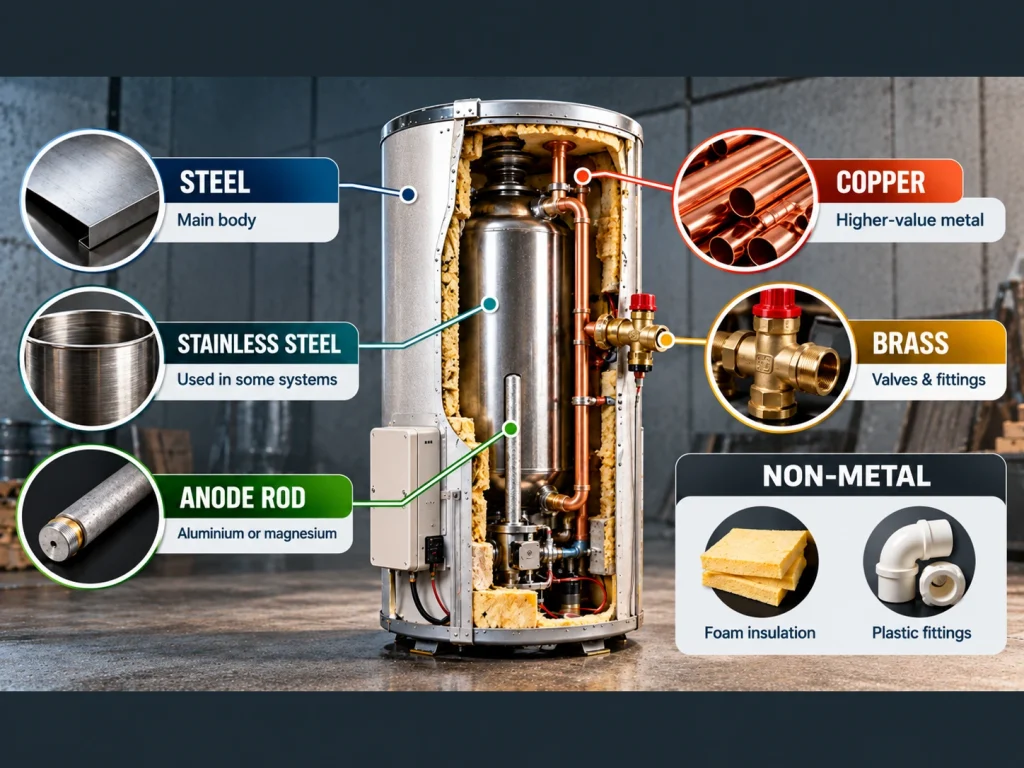
The exact mix depends on the age, brand, and type of system, but most tanks share a similar set of materials.
Component | Metal Type | Scrap Value Notes |
Outer casing/jacket | Mild steel | Bulk weight, straightforward to recycle |
Inner tank (standard units) | Enamel or glass-lined steel | Coating doesn’t significantly affect value |
Inner tank (some premium units) | Stainless steel | Generally worth more than standard steel |
Water connections | Copper (common on older systems) | Among the higher-value metals in the unit |
Valves, taps, fittings | Brass | Higher value than steel, easy to separate |
Anode rod | Aluminium or magnesium | Often overlooked, low weight but separable |
Insulation foam and plastic parts | Non-metal | Not recyclable through a scrap yard |
Steel
Steel makes up most of a hot water tank’s total weight, forming both the outer casing and, on standard units, the inner tank itself. It’s a ferrous metal, which typically sits at the lower end of the price scale compared to copper or brass, but the sheer bulk means it still adds up.
If you’re not sure how ferrous and non-ferrous metals are priced differently, our guide on ferrous vs non-ferrous metals covers it in easy-to-understand terms.
Copper
Copper typically shows up around the water connections. Older systems commonly used copper pipe for inlet and outlet fittings, while some newer installations use plastic push-fit connections instead, so the amount of copper on a tank varies with its age.
Where copper is present, it’s usually the most valuable metal on the unit.
Brass
Brass fittings are found around pressure valves, drain cocks, and threaded connection points. They’re small, but brass alloy generally sells for more per kilo than steel, so it’s worth separating rather than leaving attached to the shell.
Stainless Steel
Some hot water systems use stainless steel tanks, while many traditional storage units use enamel or glass-lined steel instead.
Construction varies by manufacturer, model, age, and system type, so there’s no single rule for which tanks will have it.
Anode Rods and Insulation
The anode rod (usually aluminium or magnesium) protects the tank from corrosion and is often overlooked during scrapping. Insulation foam and any plastic housing around the tank aren’t recyclable as scrap metal and should be separated out before the shell is weighed.
Are Hot Water Tanks Made From Stainless Steel?
Not always. Whether a tank uses stainless steel or enamel-lined mild steel depends on the manufacturer and the system tier, not the tank’s age or size alone. If you’re unsure which one you’ve got, ask your scrap yard rather than guessing, since misidentifying the material can affect how it’s graded.
Can You Scrap Electric and Gas Hot Water Systems?
Yes, both electric and gas hot water systems can generally be scrapped, though each comes with its own components worth knowing about.
- Electric systems typically have heating elements and wiring inside the tank, alongside the usual steel shell and copper or brass fittings.
- Gas systems may include a burner assembly, flue, and gas control valve, some of which contain additional metal worth separating.
Electrical and gas components should be handled by someone qualified to disconnect them safely rather than dismantled by hand at home. Once disconnected, the tank itself is scrapped the same way as any other unit.
How to Prepare an Old Hot Water Tank for Recycling
A bit of preparation helps your tank get graded properly once it arrives at the yard.
- Drain it completely before transport
- Remove loose non-metal materials where practical, such as outer plastic panels
- Separate copper or brass fittings where they can be safely removed
- Leave gas and electrical disconnection to a licensed tradesperson if the system is still connected
- Check your yard’s requirements before doing any further dismantling, since some yards accept tanks intact while others prefer certain parts removed in advance
What Not to Do Before Scrapping a Hot Water Tank
A few common mistakes are worth avoiding:
- Don’t transport a tank that’s still full of water
- Don’t assume every tank has copper pipework, since newer systems often don’t
- Don’t disconnect gas fittings yourself
- Don’t cut into electrical components unnecessarily
- Don’t remove parts based purely on guesswork about what metal they’re made from
How Much Is an Old Hot Water Tank Worth as Scrap?
An old hot water tank’s scrap value depends on several factors working together, not a single fixed number. These include:
- Total weight of the unit
- How much of that weight is steel versus copper, brass, or stainless steel
- Whether non-ferrous metals like copper and brass have been separated from the steel body
- How clean and ready the load is for grading
- Current market prices, which shift regularly for both ferrous and non-ferrous metals
Separating higher-value non-ferrous metals from the steel body can help ensure each material is graded appropriately, rather than the whole unit being priced at a single mixed-metal rate.
Where Can You Recycle a Hot Water Tank in Perth?
If you’re in Perth, our Malaga yard accepts hot water tanks from both households and tradies. Whether you’ve got one old unit from a bathroom upgrade or a trailer load from a plumbing job, our team sorts and weighs the steel, copper, and brass on site so each material is priced properly rather than lumped together.
We’re set up for straightforward, walk-in scrap drop-offs, with current pricing based on the day’s market rates.
Recycle Your Old Hot Water Tank With West Coast Metals
At West Coast Metals, our Malaga scrapyard is run to make dropping off scrap simple, whether that’s a single hot water tank or a full load from a renovation. Our female-operated team sorts and weighs your copper, brass, and steel on the spot, so you know exactly what you’re being paid for and why.
We accept loads from homeowners and trade professionals alike, and if you’d rather not separate the metals yourself, you can bring the whole unit in and let us handle the breakdown. Have a look at the full list of metals we accept to see what else around the house or job site is worth bringing in at the same time.
Scrap prices fluctuate with market conditions, so figures on this page are indicative rather than fixed quotes.